


Vertical Machining Center
What Is Vertical Machining Center
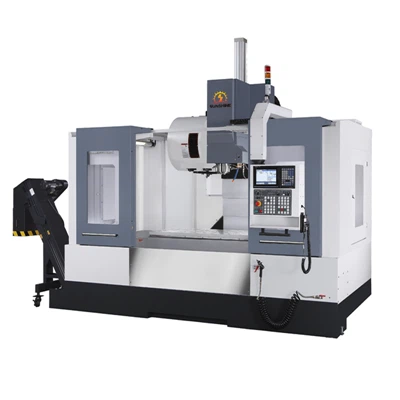
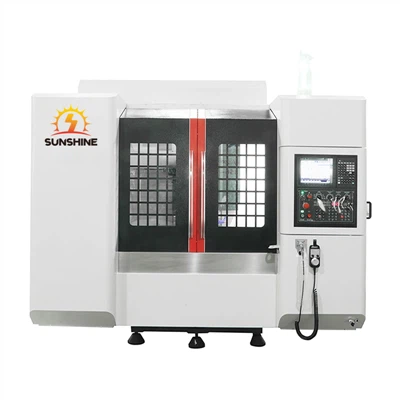
A vertical machining center (VMC) is a type of machining tool used in the manufacturing industry to create different kinds of products. It is designed to perform a variety of tasks, such as drilling, milling, routing, and others, all in a single set-up. A VMC consists of a worktable, a cutting tool, and a spindle that rotates the tool around an axis perpendicular to the table surface. The workpiece is held in place on the table, and the cutting tool moves in an up-and-down motion to shape the material. VMC are typically used for high-precision manufacturing applications where accuracy, repeatability, and speed are critical.
Advantages of Vertical Machining Center
Increased productivity
Vertical machining centers can complete multiple operations in a single setup, which reduces the need for multiple machines, setups, and handling. Additionally, they can operate continuously and require minimal human intervention, resulting in increased production output.
Precision
Vertical machining centers can achieve high levels of accuracy and precision due to their advanced control systems and rigid construction. The spindle is vertically oriented and ensures consistent cutting performance over long periods.
Versatility
A wide range of materials can be machined on a vertical machining center, including metals, plastics, and composites. They can also handle a range of complex shapes and contours, making them ideal for modern manufacturing applications.
Automation
Vertical machining centers can be automated for unmanned operations, which reduces labor costs and increases efficiency. Advanced automation systems allow for continuous manufacturing, even overnight and during weekends.
Reduced maintenance and tooling costs
Vertical machining centers require less upkeep than traditional machines, and tools can be easily changed or modified to suit specific requirements. This reduces maintenance and tooling costs and increases uptime.
Improved safety
Vertical machining centers have advanced safety features, including interlocking doors and enclosures to prevent accidents. They also have built-in safety systems that shut down the machine if there is a problem, protecting workers and reducing downtime.





High quality
We have 100% quality guarantee for our customers. We will be responsible for any quality issues.
Good service
Good after-sales service, handling customer problems and solving problems for customers.
Competitive price
Our products have a complete range, excellent quality and reasonable prices.
Fast delivery
Strong production capacity ensures on-time delivery and transportation to the destination as soon as possible.
Advanced equipment
The company has advanced large-scale testing equipment. After years of development, it has grown into a professional CNC vertical lathe manufacturer with leading technology and complete varieties.
Company business philosophy
People-oriented, quality first, sincere communication, honest management, and the spirit of continuous innovation, dare to challenge, self-reflection and self-revolution, provide customers with professional products and services.
What Are the Main Types of Vertical Machining Center
Bridge-type VMC
In this type, the gantry moves along the X-axis while the table moves along the Y-axis. It has a stable structure and is suitable for large workpieces.
Column-type VMC
In this type, the column moves along the Y-axis while the table moves along the X-axis. It is suitable for smaller workpieces and for high-speed machining.
Double-column VMC
In this type, two columns support the gantry, providing high stability and rigidity. It is suitable for machining large and heavy workpieces.
Turret-type VMC
In this type, the spindle head has a rotating turret that can hold multiple tools. It is suitable for high-speed and multiple-axis machining.
Boxway VMC
In this type, the table and saddle are mounted on a solid box-way guide system, providing high rigidity and accuracy. It is suitable for heavy-duty machining.
Linear guide-way VMC
In this type, the table and saddle are mounted on linear guide-ways, providing fast and accurate movement. It is suitable for high-speed machining and for small to medium-sized workpieces.
Mold and die making
VMCs are widely used to produce molds and dies for a variety of manufacturing processes, including injection molding, stamping, and extrusion. VMCs can machine complex shapes and contours with high precision, making them ideal for this application.
Aerospace
VMCs are commonly used in the aerospace industry for manufacturing aircraft components, such as engine parts, landing gear, and wings. The high precision and accuracy of VMCs allow for tight tolerances and complex geometries required in aerospace.
Automotive
VMCs are used in the automotive industry for manufacturing engine blocks, transmission housings, and other components. The high-speed spindle and quick tool change capabilities of VMCs make them ideal for this application.
Electronics
VMCs are used in the electronics industry for manufacturing computer parts, printed circuit boards (PCBs), and other electronic components. VMCs can machine small parts with high accuracy, making them ideal for this application.
Medical
VMCs are used in the medical industry for manufacturing prosthetics, implants, and other medical devices. The high precision and accuracy of VMCs allow for tight tolerances required in medical devices.
Military and defense
For the production of aircraft engines, tank parts, missile parts, and other defense industry components.
Tool and die industry
VMCS can produce highly accurate tooling and dies for use in manufacturing operations.
Energy industry
Vertical machining centers are used in the production of turbines, generators, and other components for the energy sector.
Cast iron
The base of the machine is made of cast iron, which provides rigidity and stability to the machine. Cast iron has high vibration damping capacity, which helps in producing accurate and precise parts.
Steel
The column and the spindle housing are made of steel, which provides strength to the machine. Steel also has high hardness and toughness, which makes it resistant to wear and tear caused by repeated use.
Aluminum
The table and the machine cover are made of aluminum, which is lightweight and has high thermal conductivity. This helps in faster cooling of the machine and prevents thermal expansion.
Granite
The machine bed and the spindle nose are made of granite, which has high stability and rigidity. Granite also has low thermal expansion, which helps in maintaining accuracy.

Process of Vertical Machining Center

Machining
The operator initiates the machining process by starting the spindle and activating the cutting tool. The tool then moves along the programmed tool path. The cutting process is monitored to ensure that the correct dimensions and surface finish are achieved.

Loading and fixturing
The next step is to load the workpiece onto the machining center and fix it in place using a clamping mechanism. This is done to ensure that the workpiece is secure and stable during the machining process.

Programming
The operator then creates a computer program that contains the instructions for the machining process. This program includes the cutting parameters, tool paths, and other parameters necessary for the machining process.

Tooling and spindle
Once the program is loaded into the machine's controller, the operator selects the appropriate cutting tool and inserts it into the spindle. The spindle is responsible for rotating the tool at the prescribed speed and feeds during machining.

Planning and setup
The first step is to plan the machining process and set up the machining center. The operator needs to choose the appropriate tools, cutting parameters, and workholding systems for the job.

Finishing
After the initial cutting is complete, the operator will perform any necessary finishing operations to achieve the desired surface finish and geometry.

Unloading and inspection
Once the machining process is complete, the operator unloads the finished workpiece and inspects it for accuracy and quality.

Cleanup and maintenance
Finally, the machining center is cleaned up, and any worn or damaged tools are replaced. Regular maintenance is performed on the machine to ensure continued reliability and performance.
Spindle
The spindle is the rotating component that holds the cutting tool and powers its motion.
Workholding
The workholding system is the mechanism that secures the workpiece in place during machining. Common workholding systems include vises, chucks, and clamps.
Tool magazine
The tool magazine is a storage cartridge that holds all of the cutting tools used by the VMC. The magazine is typically located near the spindle and can be automated to swap tools quickly and efficiently.
Control unit
The control unit is the brain of the VMC, regulating the spindle speed, tool changes, and other operations. The control is typically a computerized system that can be programmed to execute complex machining tasks.
Coolant system
The coolant system is responsible for flushing away chips and debris from the cutting area and keeping the cutting tool and workpiece cool during machining.
Axis and motion systems
The VMC has several motion systems that control the movement of the cutting tool and workpiece during machining. This includes the X, Y, and Z-axis, which control the horizontal and vertical movement of the tool as well as the rotary axis, which controls the rotation of the workpiece.
Chip management
The VMC includes a mechanism for collecting and disposing of chips and debris generated during machining. This can include a conveyor or chip cart to efficiently remove waste material.
How to Maintain Vertical Machining Center
Keep the machine clean
Regularly clean the machine's surfaces, especially the work area and the tool holders, from debris and dust that can clog and damage the machine's mechanisms.
Check and replace coolant regularly
Coolant helps to remove heat from the machining process and prevents the workpiece from overheating. Check the coolant regularly, and replace it if necessary.
Check and replace filters
The machine has several filters, including the coolant filter, air filter, and hydraulic filter. Clean or replace them according to the manufacturer's instructions.
Inspect and replace worn parts
Regularly inspect the machine's components for wear and damage, including belts, bearings, and seals. Replace any damaged parts immediately.
Perform regular maintenance
Follow the manufacturer's recommendations for maintenance tasks such as checking the spindle runout, the accuracy of the machine's axes, and calibration.
Lubricate regularly
Proper lubrication is essential to keep the machine running smoothly and reduce wear and tear on the parts. Follow the manufacturer's lubrication schedule, and use the recommended lubricants.
Our Factory
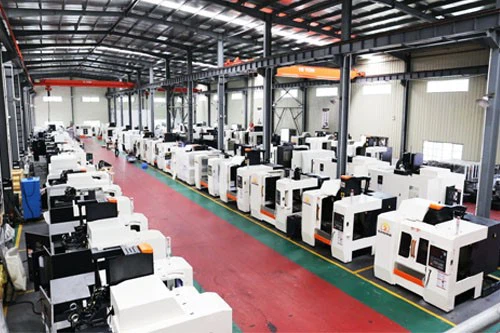
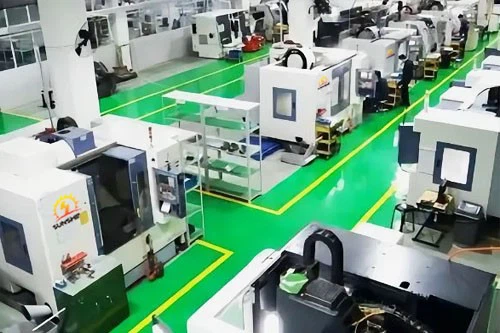
Since its establishment, Shandong Sunshine Machinery Co., Ltd. has always been committed to the research and development, manufacturing, sales and service of high-end CNC vertical lathe.


FAQ
Q: What is a vertical machining center?
Q: What are the advantages of using a vertical machining center?
Q: What is the difference between a vertical machining center and a horizontal machining center?
Q: What types of materials can be used with a vertical machining center?
Q: What is the maximum size of workpieces that can be machined with a vertical machining center?
Q: What is the accuracy level of a vertical machining center?
Q: What is the maximum spindle speed of a vertical machining center?
Q: What types of cutting tools can be used with a vertical machining center?
Q: What types of operations can be performed with a vertical machining center?
Q: Can a vertical machining center be used for both roughing and finishing operations?
Q: What is the maximum feed rate of a vertical machining center?
Q: How is the cutting depth adjusted on a vertical machining center?
Q: What is the difference between a 3-axis and a 5-axis vertical machining center?
Q: Can a vertical machining center be used for prototyping?
Q: What is the price range of a vertical machining center?
Q: What is the maintenance schedule for a vertical machining center?
Q: What is the lifespan of a vertical machining center?
Q: What safety precautions should be taken when operating a vertical machining center?
Q: What is the lead time for a vertical machining center?
Q: What type of training is required to operate a vertical machining center?