


CNC Inclined Lathe
What Is CNC Inclined Lathe
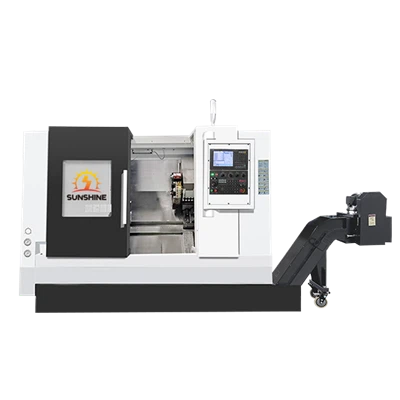
CNC inclined lathe combines CNC technology and inclined bed design, which can complete complex processing tasks, such as turning, milling, boring, etc., and accurately control the angle and position of the workpiece to achieve a variety of processing methods. Its characteristics mainly include high precision, high efficiency, multi-function and high degree of automation, which can significantly reduce the interference of human factors and improve production efficiency and quality.
High precision
The inclined bed design makes the machine tool have higher rigidity and stability during the processing, so as to provide more accurate processing results. This design reduces vibration and deformation, resulting in higher processing accuracy and better surface quality.
High stability
Since the bed is inclined and intersects with the horizontal plane to form a certain angle, this design can better resist cutting forces during processing, reduce vibration and offset of the machine tool, and thus improve the stability of processing.
High efficiency
CNC inclined lathes are usually equipped with multi-station turrets or power turrets, which can achieve fast tool change and continuous processing, thereby improving processing efficiency. In addition, the CNC system can accurately control the processing path and speed, further shortening the processing cycle.
Wide range of process performance
CNC inclined lathes can process various complex shapes of workpieces, such as straight cylinders, oblique cylinders, arcs and various threads, grooves, worms, etc. This wide range of process performance enables CNC inclined lathes to meet the production needs of different industries.
High degree of automation
CNC inclined lathe uses CNC system to control the processing process, which can realize functions such as automatic programming, automatic tool change, and automatic detection, greatly reducing the need for manual intervention. This highly automated production method not only improves production efficiency, but also reduces the impact of human factors on processing quality.



Why Choose Us
High quality
We have 100% quality guarantee for our customers. We will be responsible for any quality issues.
Good service
Good after-sales service, handling customer problems and solving problems for customers.
Competitive price
Our products have a complete range, excellent quality and reasonable prices.self-reflection and self-revolution.
Fast delivery
Strong production capacity ensures on-time delivery and transportation to the destination as soon as possible.
Advanced equipment
The company has advanced large-scale testing equipment. After years of development, it has grown into a professional CNC lathe manufacturer with leading technology and complete varieties.
Company business philosophy
People-oriented, quality first, sincere communication, honest management, and the spirit of continuous innovation, dare to challenge, customers with professional products and provide services.

Small CNC inclined lathe
Small CNC inclined lathes are suitable for processing small metal parts. This type of machine tool has a compact structure, high precision, and can realize multiple functions such as automatic feeding and fast tool change.
Medium-sized CNC inclined lathe
Suitable for processing large and medium-sized shafts, discs, housings and other parts. The machine tool has a high-precision worktable and can be equipped with an automatic feeding device and automatic chip removal system, with excellent processing accuracy and stability.
Large CNC inclined lathe
Suitable for processing large shafts, discs, housings and other parts. The machine tool has high spindle precision and large cutting force. It can realize multiple functions such as automatic tool change and automatic feeding. It has the characteristics of high precision, high rigidity and good stability.
Application of CNC Inclined Lathes
Aerospace industry
CNC inclined lathes are used to process high-precision and high-precision parts, such as aircraft engine parts, fuselage structural parts, satellite parts, etc.
Automotive industry
CNC inclined lathes are used to process various key parts, such as engine blocks, crankcases, transmission system gears, bearings, etc.
Defense industry
CNC inclined lathes are used for manufacturing critical components for military vehicles, weapons, and other defense applications.
Industrial machinery
Used for core components of mechanical equipment such as transmission axles, reducers, transmissions, and other complex mechanical parts processing.
Medical industry
In the manufacturing of medical devices, CNC inclined lathes can meet these stringent requirements with their high-precision and high-efficiency processing capabilities.
Electronics industry
CNC inclined lathe can meet the processing needs of electronic components, communication equipment shells and internal structural parts.
Heavy machinery industry
CNC inclined lathes are used for manufacturing large-sized components such as shafts, axles, and gears for construction equipment, and other heavy machinery.
Mold manufacturing
CNC inclined lathes can process moulds with complex shapes, such as automotive moulds, aerospace moulds, etc.
Bed
Slant bed CNC lathes are often made of high-quality cast iron or cast steel, which have good shock absorption and stability, helping to reduce vibration during cutting and improve machining accuracy.
Tool holder
The CNC inclined turning tool holder adopts an inclined rail structure in design to improve cutting efficiency and processing accuracy. Its material is generally high-strength alloy steel or hard alloy.
Spindle
The spindle is one of the core components of the CNC inclined lathe, which is used to support the tool and transmit the cutting force. The material of the spindle is usually high-strength alloy steel or stainless steel to ensure its sufficient rigidity and durability.
Guide rail
Guide rail is a key component for the precise movement of moving parts (such as slides and tool holders) in CNC inclined lathes. It is usually made of high-precision rolling bearing steel or alloy steel, and is precision machined and heat treated to ensure its high precision and long life.


Design
A computer-aided design (CAD) software is used to create a 3D design of the part to be machined.
Preparation
The design is loaded into the CNC lathe's computer system, which translates the design into machine-readable code.
Set up
The machine operator loads the raw material into the lathe and sets up the necessary tools and fixtures, such as chucks and collets.
Programming
The operator inputs the CNC code into the machine's computer system, specifying the required cutting speeds, depths, and angles.
Execution
The machine begins the cutting process, automatically performing each step according to the programmed instructions until the part is completed.
Finishing
Depending on the application, the part may undergo additional processes such as polishing, plating, or painting before it can be used.
Bed
The bed of CNC inclined lathe is generally made of high-quality cast iron or cast steel, which has good rigidity and stability. The bed is the basic support of the entire machine tool. It is fixed on the bed legs, carries all other components, and ensures that they maintain accurate relative positions during operation.
Guide rails
The guide rails of CNC inclined lathe are usually made of high-precision rolling bearing steel or alloy steel, and are precision machined and heat treated to ensure their high precision and long life. The inclined design of the guide rails helps to improve chip removal performance and improve processing efficiency.
Lead screw
Lead screws are important components used to transmit feed motion in CNC inclined lathes. They drive the tool holder and other components to feed longitudinally or transversely through rotational motion, thereby realizing the cutting of workpieces. Lead screws are one of the precision parts in lathes and are usually not used for automatic feeding to maintain their accuracy.
Cooling and lubrication system
Cooling and lubrication systems are used to cool and lubricate the cutting area of the machine tool to reduce cutting temperature and tool wear. They play an important role in improving processing quality and extending machine tool life.

How to Maintain CNC Inclined Lathe

Daily maintenance
Before starting the machine every day, check and clean all parts of the machine tool, especially key parts such as guide rails, screws, spindles, etc., to remove dust and chips.

Lubrication
Check the lubrication system regularly to ensure that the lubricating oil is adequately supplied and kept clean. Regularly replace lubricating oil and filters and other wearing parts. Pay special attention to the lubrication of guide rails, screws and other parts.

Electrical system
Regularly check the electrical system of the machine tool, including cables, motors, controllers, etc., to ensure that they are operating normally.
Clean up dust and debris in the electrical control box and keep electrical components clean and dry.

Component inspection
Regularly check the various parts of the machine tool, such as guide rails, screws, spindles, etc., to ensure that they are in good condition and not worn or damaged.
Check the cooling system to ensure that the coolant is sufficient and clean.

Precision calibration
Periodically calibrate the machine tool for precision, including geometric accuracy, positioning accuracy, and repeatability accuracy.

Anti-rust treatment
When the machine tool is shut down for a long time, the machine tool should be treated with anti-rust to prevent rust.
Anti-rust oil or anti-rust paint can be used to apply or spray on the key parts of the machine tool.
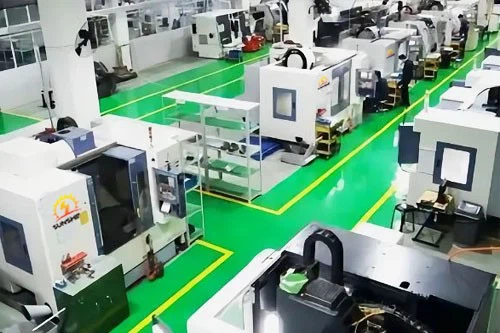
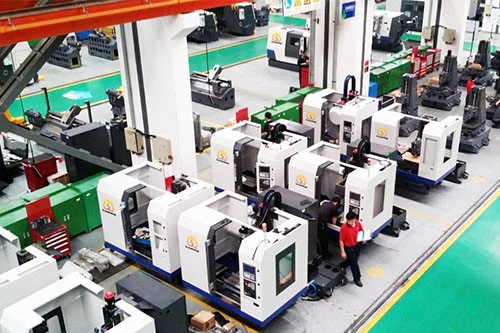
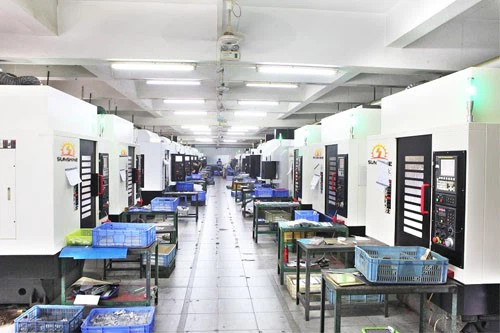
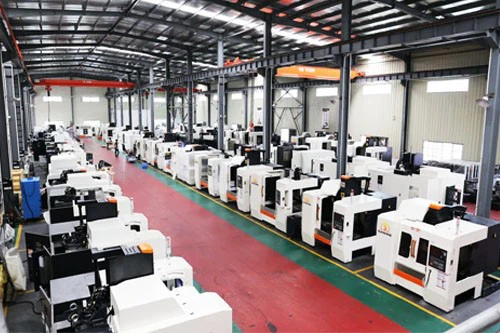
Our Factory
Since its establishment, Shandong Sunshine Machinery Co., Ltd. has always been committed to the research and development, manufacturing, sales and service of high-end CNC lathe.
FAQ
Q: What is a CNC inclined lathe?
Q: What is the difference between a manual inclined lathe and a CNC inclined lathe?
Q: How does a CNC inclined lathe work?
Q: What materials can be processed by CNC inclined lathe?
Q: What is the maximum workpiece size that can be machined on a CNC inclined lathe?
Q: How does a CNC lathe differ from a CNC mill?
Q: What are the advantages of using a CNC inclined lathe?
Q: What is the programming language used for CNC inclined lathes?
Q: Can a CNC lathe be operated by a beginner?
Q: What safety precautions should be taken when operating a CNC lathe?
Q: What is a CNC lathe chuck?
Q: What is the maximum cutting speed of a CNC inclined lathe?
Q: What is the accuracy of a CNC lathe?
Q: What is the maintenance required for a CNC inclined lathe?
Q: What is a lathe turret?
Q: What is a live tooling attachment on a CNC lathe?
Q: What is a sub-spindle on a CNC lathe?
Q: What is a bar feeder on a CNC lathe?
Q: What is a tailstock on a CNC lathe?
Q: What is a collet chuck on a CNC lathe?