


Sawing Machine
What is a Sawing Machine
A band saw is a machine tool that uses a circular saw blade, band saw, or saw strip as a cutting tool to cut metal materials through the rotation or reciprocating motion of the cutting tool. It is widely used in machinery manufacturing, automobiles, aerospace and other fields, and can efficiently complete the sawing of round, square, pipe and profile materials. According to the type of cutting tool, it is divided into circular band saws and band saws.
High-efficiency cutting
The sawing machine adopts a continuous cutting method, which can remove more material per unit time compared to traditional turning, milling, or abrasive wheel cutting, significantly shortening the processing cycle. The CNC fully automatic sawing machine can achieve automatic feeding, multi-segment cutting, and batch processing, reducing manual intervention and making it suitable for large-scale production needs.
High-precision machining
CNC band saws, through a closed-loop control system and precision guideways, can control cutting errors within ±0.1mm, ensuring consistent workpiece dimensions. The cut surface is smooth and flat, reducing burrs and deformation, making it particularly suitable for parts requiring high surface quality (such as bearings and gears). CNC band saws can achieve multi-angle cutting from 0° to 60°, adapting to the processing needs of complex workpieces.
Wide material adaptability
Band saws can cut metal materials such as carbon steel, stainless steel, aluminum alloy, copper alloy, and titanium alloy. Through customized fixtures or CNC programming, they can handle complex-shaped workpieces such as pipes, profiles, and irregular cross-sections. Large band saws can cut heavy workpieces with a thickness of over 1 meter, meeting the needs of energy, construction, and other fields.
Cost Optimization
The sawing machine boasts a long tool life; carbide saw blades or high-speed steel saw bands undergo special treatment for high durability and low cost per cut. Precision cutting reduces waste of scrap materials, making it particularly suitable for processing precious metals (such as titanium and nickel-based alloys). Compared to laser or plasma cutting, the sawing machine consumes less energy, resulting in long-term energy cost savings.
CNC lathes are capable of working at high speeds, reducing the time required to produce a part. This speed also reduces the total cycle time, which means that parts can be produced faster and with greater efficiency.


Why Choose Us
High quality
We have 100% quality guarantee for our customers. We will be responsible for any quality issues.
Good service
Good after-sales service, handling customer problems and solving problems for customers.
Competitive price
Our products have a complete range, excellent quality and reasonable prices.self-reflection and self-revolution.
Fast delivery
Strong production capacity ensures on-time delivery and transportation to the destination as soon as possible.
Advanced equipment
The company possesses advanced large-scale testing equipment. After years of development, it has grown into a leading professional sawing machine manufacturer with a complete range of products and advanced technology.
Company business philosophy
People-oriented, quality first, sincere communication, honest management, and the spirit of continuous innovation, dare to challenge, customers with professional products and provide services.

Metal band saw machine
A metal band saw is a machine tool that uses the cyclic motion of a ring-shaped band saw blade to cut metal materials. Its core structure includes a bed, drive/driven saw wheels, a saw blade tensioning device, and a hydraulic control system. By adjusting the saw wheel speed and feed rate, it can efficiently cut metal materials such as carbon steel, stainless steel, and alloy steel. It features narrow kerf, high precision, high material utilization, and strong adaptability, and is widely used in machinery manufacturing, automotive, aerospace, and other fields.
Circular saw cutting machine
A circular saw cutting machine is a machine tool that uses a high-speed rotating circular saw blade as a cutting tool to cut metal or non-metal materials through the relative movement between the saw blade and the workpiece. Its core structure includes a drive motor, saw blade spindle, feeding system and workpiece clamping device. It features high cutting efficiency, smooth cuts and strong adaptability (it can process pipes, profiles, plates, etc.), and is widely used in machinery manufacturing, construction, automotive and aerospace fields.
Application of Sawing Machine
Mechanical Manufacturing
Cutting shafts, gear blanks, flanges, etc.
Automotive Industry
Machining engine blocks, gearbox housings, chassis tubing, etc.
Aerospace
Cutting difficult-to-machine materials such as titanium alloys and high-temperature alloys.
Energy Sector
Cutting large structural components such as oil pipelines, wind turbine towers, and nuclear power equipment.
General Component Machining
Cutting shafts, gear blanks, flanges, couplings, and other round or disc-shaped parts.
Construction Industry
Cutting H-beams, angle steel, channel steel, and other construction profiles for bridges and high-rise building frames.
Pipeline Engineering
Cutting spiral welded pipes or seamless steel pipes for urban water supply and gas pipelines.
Shipbuilding Industry
Cutting marine steel plates, profiles (such as bulb flats and T-sections), and deck machinery components.
Cast Iron
The saw bed is typically made of cast iron, fixed to the base to provide rigid support for the machine tool. Cast iron has good casting properties and vibration damping properties, making it suitable for manufacturing components such as machine tool beds that need to withstand large loads and vibrations.
High-Quality Alloy Structural Steel
Key components such as the saw beam and column are mostly made of high-quality alloy structural steel. These components need to withstand various forces during the sawing process, therefore requiring materials with high strength and rigidity.
Wear-Resistant Alloy
Guide blocks in the guiding device and wear-resistant blocks on the back of the saw blade are often made of wear-resistant alloys to improve wear resistance and service life.


Adjust cutting parameters
Adjust cutting parameters such as cutting speed, depth, and angle according to the size and material of the workpiece to ensure they meet the workpiece requirements.
Manual trial run
Before actual cutting, conduct a manual trial run to check if the saw operates smoothly and if the saw blade is on the correct cutting path.
Start the saw
Start the equipment according to the saw's operation manual, which typically includes turning on the power switch and adjusting to the appropriate cutting and feed speeds.
Start cutting
Slowly feed the workpiece into the saw, keeping it stable and avoiding shaking. During the cutting process, continuously monitor the saw's operating status, paying attention to whether the saw blade overheats and whether there is any abnormal noise or vibration.
Handling Emergencies
In case of emergencies, such as a broken saw blade or a stuck workpiece, immediately press the emergency stop button, cut off the power, and then take measures to resolve the problem.
Mechanical Structure
The mechanical structure of the sawing machine includes a base, bed, and column. The base provides stable support, the bed bears key components, and the column ensures the saw blade cuts perpendicularly via guide rails.
Transmission System
The transmission system consists of a motor, pulleys, worm gear box, drive wheel, and driven wheel. The motor drives the saw blade to rotate, and the cutting speed is adjusted via a speed change mechanism.
Guiding System
The guiding system controls the saw blade's direction of travel through guide arms, guide wheels, and wear-resistant blocks, reducing vibration and ensuring a smooth cut.
Clamping System
The clamping system uses hydraulic or manual vises to quickly secure the workpiece and prevent displacement. The clamping force is adjustable to accommodate different materials.
Hydraulic System
The hydraulic system drives the lifting and clamping of the saw beam, and the feed speed is infinitely adjustable via a speed control valve.
Electrical Control
The electrical system integrates a control box, operation panel, and sensors to achieve automated action logic control. It supports parameter setting and fault monitoring; the level of intelligence determines the ease of operation.

How to Maintain Sawing Machine

Daily Cleaning and Lubrication
Clean the saw's worktable, guide rails, and sawdust accumulation areas daily to prevent sawdust from wearing down parts. Regularly check the lubrication system and add lubricating oil or grease to moving parts such as guide rails and lead screws to reduce friction loss. Regularly filter the coolant to maintain stable cutting performance and prevent pipe blockage.

Key Component Tightening and Adjustment
Regularly check the tightness of all connecting bolts and nuts on the saw, paying particular attention to the connections between the column and bed, and between the saw beam and drive shaft, to prevent loosening that could cause vibration. Ensure the saw blade is perpendicular. Calibrate the hydraulic system pressure gauge to prevent abnormal pressure from causing operational failure or component damage.

Transmission System Maintenance
Monthly check the belt tension of the pulleys and worm gear box. Adjust if too loose, replace if too tight to prevent slippage or breakage. Observe the bearing operation of the drive and driven pulleys, replenish grease, and monitor temperature rise. Immediately stop the machine and inspect for abnormal temperature increases. Clean dust from the motor cooling fan to ensure efficient heat dissipation and extend motor life.

Saw Blade Management and Replacement
Select saw blades with appropriate tooth pitch according to the workpiece material; use fine teeth for hard materials and coarse teeth for soft materials. Regularly check the wear of the saw blades; replace them promptly if cracks, tooth deformation, or rough cutting surfaces are found. When installing new saw blades, adjust the tension; too loose a tension can cause cutting deviation, while too tight a tension will accelerate blade breakage.

Hydraulic System Maintenance
Change the hydraulic oil quarterly, filter or clean the oil tank to prevent oil contamination that could cause valve jamming. Check the sealing of hydraulic line joints; replace aged seals to prevent oil leaks and insufficient pressure. Observe the smoothness of cylinder movement during operation; if creeping or impact occurs, repair the hydraulic pump or speed control valve.

Electrical System Inspection and Protection
Regularly clean the dust inside the electrical control box with compressed air to prevent short circuits. Check the sensitivity of limit switches and emergency stop buttons to ensure reliable operation. Check the grounding wire connection to avoid the risk of leakage. When not in use for a long period, disconnect the power supply and cover with a dust cover; in humid environments, install a dehumidifier to prevent moisture damage to components.
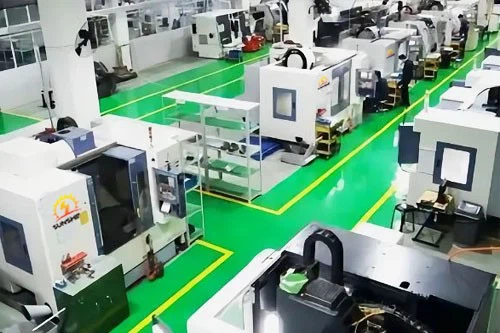
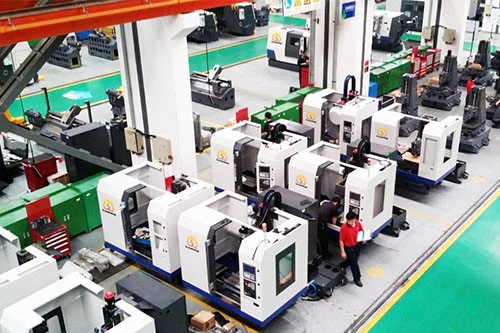
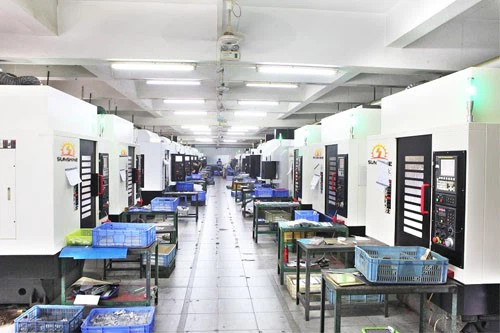
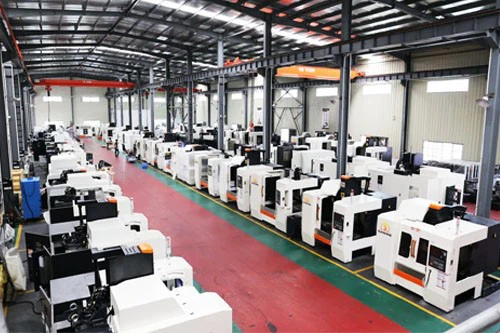
Our Factory
Since its establishment, Shandong Sunshine Machinery Co., Ltd. has been committed to the research, development, manufacturing, sales and service of high-end sawing machines.
FAQ
Q: What is a Sawing Machine?
Q: What are the differences between a band saw and a circular saw?
Q: How does a Sawing Machine work?
Q: What materials can a Sawing Machine process?
Q: What are the advantages of using Saving Machine?
Q: Can a Sawing Machine be operated by a beginner?
Q: What safety precautions should be taken when operating a Sawing Machine?
Q: What is the maximum cutting speed of a Sawing Machine?
Q: What maintenance and care does a Sawing Machine require?
Q: What is the bar feeder on a sawing machine?