


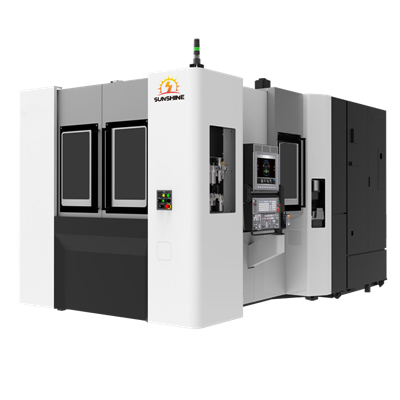
5 Axis Horizontal Machining Center
The five-axis horizontal machining center is a high-precision, multi-functional CNC machine tool that is widely used in the field of complex parts processing.
The five-axis horizontal machining center can realize the simultaneous processing of workpieces in multiple directions, greatly improving the processing efficiency and precision, and is especially suitable for processing complex parts with free-form surfaces.
The five-axis horizontal machining center is widely used in the following fields:
1. Aerospace: Processing body parts, turbine parts and impellers with complex surfaces.
2. Automobile manufacturing: Processing high-precision parts such as engine cylinders and gearbox housings.
3. Mold manufacturing: Processing complex mold cavities and cores.
4. Precision machinery: Processing high-precision mechanical parts and components.
IV. Market situation
There are many brands and models of five-axis horizontal machining centers on the market, and the prices vary depending on the brand, configuration and performance. Generally speaking, the five-axis horizontal machining centers of high-end brands are more expensive, but have higher processing accuracy and stability. At the same time, with the development of technology and market competition, some products with high cost performance are gradually favored by users.
The five-axis horizontal machining center is a high-precision, multi-functional CNC machine tool with broad application prospects in the field of complex parts processing.
| Specification | unit | CMC500f | CMC650U | DMC800U |
| working desk size | mm | Φ630×500 | Φ650×540 | Φ800 |
| Workbench T-slot | mm | 14 | 14 | 14 |
| Center hole of workbench | mm | Φ30 | Φ50 | Φ50 |
| Maximum load-bearing capacity of workbench | kg | 200 | 300 | 1200 |
| X-axis travel | mm | 550 | 650 | 850 |
| Y-axis travel | mm | 450 | 520 | 850 |
| Z-axis travel | mm | 400 | 475 | 600 |
| A-axis rotation range | º | - | ±120 | ±120 |
| B-axis rotation range | º | -5/110 | - | - |
| C-axis rotation range | º | 360 | 360 | 360 |
| Distance from spindle end to worktable | mm | 150-550 | 150-625 | 150-750 |
| Spindle taper | -- | BBT40 | BBT40 | HSK-A63 |
| Spindle maximum speed | rpm | 10000 | 12000 | 14000 |
| Spindle power | kw | 7.5 | 7.5 | 25 |
| Spindle torque | N.M | 35.8/70 | 45 | 91.7 |
| Tool magazine type | -- | Disc | Disc | Horizontal chain type |
| Tool magazine capacity | 把 | 24 | 24 | 30 |
| Maximum tool diameter (full tool/adjacent tool) | mm | Φ78/Φ150 | Φ78/Φ150 | Φ78/Φ150 |
| Maximum tool length | mm | 300 | 300 | 300 |
| Maximum tool weight | kg | 8 | 8 | 8 |
| Tool change time (T-T) | s | 1.55 | 1.55 | 2 |
| Rapid moving speed (X/Y/Z) | mm/min | 42000/42000/42000 | 42000/42000/42000 | 32000/32000/32000 |
| Cutting feed speed (X/Y/Z) | mm/min | 1-10000/1-10000/1-10000 | 1-10000/1-10000/1-10000 | 1-10000/1-10000/1-10000 |
| Positioning accuracy (X/Y/Z) | mm | 0.005/300JIS | 0.005/300JIS | 0.005/300JIS |
| Positioning accuracy (A/C) | " | - | ±5 | ±5 |
| Positioning accuracy (B/C) | " | ±5 | - | - |
| Repeatability (X/Y/Z) | mm | ±0.003JIS | ±0.003JIS | ±0.003JIS |
| Repeatability (A/C) | " | - | 4 | 4 |
| Repeatability (B/C) | " | 4 | - | - |
| Machine weight | kg | 6500 | 8500 | 18000 |
| Machine dimensions | mm | 3500×3400×2700 | 3970×3210×2800 | 5500×4000×3500 |
Taiyun (Shandong) CNC Machine Tool Co., Ltd :Your Professional CNC Horizontal Machining Center Supplier!
Since its establishment, our company has always been committed to the research and development, manufacturing, sales and service of high-end CNC vertical lathes, and has always cooperated sincerely with our customers to jointly develop high-end CNC vertical lathes. High-end CNC equipment meets the processing needs of different industries.
Rich Product Range
The company's current mainstream products include: single column CNC vertical lathe series, double column double turret CNC vertical lathe series, moving column double column double turret CNC vertical lathe series, grinding wheel special CNC vertical lathe series, gantry dual spindle graphite special CNC vertical lathe series car series.
Wide Range of Uses
Our products are widely used in precision processing scenarios such as aviation, aerospace, high-speed rail, automobiles, motors, elevators, precision instruments, graphite materials, agricultural machinery, engines, etc.
Advanced Equipment
The company has advanced large-scale testing equipment and a gantry machining center. The gantry machining center can perform various milling operations such as plane milling, vertical milling, slot milling, etc., and is suitable for processing large plates, molds and complex curved surfaces.
Leading Service
We have many years of industry experience and a complete production management, quality supervision, sales service operation system. Whether you want to purchase a single-column CNC vertical lathe series or a special CNC vertical lathe series for grinding wheels, just send your requirements via email and we can customize the product for you.

The CNC turntable of the high-speed CNC horizontal machining center uses a special turntable bearing to support a larger inner diameter, which can minimize the vibration generated during machining. This Doosan HMC Machine is also equipped with a variety of advanced technologies and equipment to ensure high-precision and efficient machining.

Heller Machining Center is an important equipment in modern manufacturing industry, which has the advantages of high precision, high efficiency and high reliability. Heller Machining Center is mainly composed of bed, column, slide seat, spindle box, rotary table, spindle group, tool store, spindle drive system, feed drive system, lubrication system, hydraulic system, pneumatic system, cooling system and chip removal system.

Horizontal Machining Center HMC630
One of the main benefits of a Horizontal Machining Center HMC630 is its advanced chip management system. During machining, chips are automatically removed from the workpiece and directed to the chip conveyor for disposal. This ensures that the cutting area remains clean and free of debris, reducing the risk of damage to the machine and the workpiece, and improving the quality and consistency of the output.

Horizontal Machining Center HMC1075
The Horizontal Machining Center HMC1075 is designed for high-volume production, with its ability to handle multiple workpieces and perform multiple cutting operations simultaneously. It offers faster cycle times and higher production rates due to its high-speed spindle and efficient chip evacuation.

Horizontal Machining Center HMC1395
The Horizontal Machining Center HMC1395 is a cutting-edge machine tool designed to deliver high precision and productivity in metal cutting operations. With its unique horizontal orientation, this machine provides high stability and rigidity during machining, resulting in superior surface finish, accuracy, and repeatability.

Horizontal Machining Center HMC1814
One of the key features of Horizontal Machining Center HMC1814 is their ability to provide unmatched after-sales support. These machines are often used for heavy-duty machining operations, which means that they may require frequent maintenance and repairs. With a reliable after-sales support system in place, customers can rest easy knowing that their machines will be back up and running in no time.

Horizontal High-Speed Machining Center
A Horizontal High-speed Machining Center (HMC) is a type of computer numerical control (CNC) machine tool designed for high-speed milling, drilling, and boring operations. It is characterized by its horizontal spindle orientation, which allows for the efficient cutting of workpieces that are positioned parallel to the ground.

The spindle is the core part of the machine tool, and the speed and accuracy of the spindle are also very important parameters. High speed, high rigidity spindle units enable high speed, high precision machining, thereby improving production efficiency and quality. The use of high-precision roller screws for three axes is another important design feature. Roller screw has high bearing capacity and motion accuracy, which can ensure the stability and machining accuracy of the machine tool.

High Precision Horizontal Machining Center
The horizontal machining center is an efficient and high-precision machine tool suitable for small and medium-sized batches of complex shape processing and production requiring high precision. It has the advantage of strong comprehensive processing ability and can complete various types of processing tasks, such as milling, drilling, boring, tapping and so on.
A Horizontal High-speed Machining Center (HHMC) is a type of CNC (Computer Numerical Control) machine designed for high-speed and high-efficiency machining processes. It typically features a horizontal spindle orientation, which allows for the easy removal of chips and provides excellent visibility for the operator during machining operations. These machines are equipped with multiple axes (usually three or more) and are capable of performing complex machining tasks such as milling, drilling, and boring on various materials. The high-speed capabilities of these machines make them ideal for processing small to medium-sized workpieces with high precision and surface finish requirements.
Features of CNC Horizontal Machining Center
Higher Spindle Utilization
One of the key advantages of a CNC Horizontal Machining Center is its ability to simultaneously machine multiple sides of a workpiece. This means that the machine can perform multiple operations in a single setup, reducing the need for manual intervention and increasing overall productivity.
Multiple Tooling Options
With a CNC Horizontal Machining Center, it is possible to use multiple tools simultaneously, either through multiple spindles or a tool changer. This enables the machine to perform various operations, such as drilling, tapping, milling, and turning, in a single setup, further improving productivity.
Automatic Tool Measurement and Compensation
CNC Horizontal Machining Center is equipped with automatic tool measurement systems, which measure tool length and diameter and compensate for any variations. This feature ensures consistent machining results and reduces the need for manual adjustment, improving overall precision.
Accurate Positioning
The advanced control systems of CNC Horizontal Machining Center enable precise positioning of the workpiece and tools. This eliminates the potential for human error and ensures consistent accuracy throughout the machining process.
Parts of CNC Horizontal Machining Center
Spindle
The spindle is one of the most critical components of a horizontal CNC center. It is responsible for rotating the cutting tool at high speeds, allowing for precise material removal from the workpiece. Spindles come in various types, including geared spindles and direct-drive spindles, each offering specific advantages in terms of speed and torque.
Tool Magazine
CNC centers are equipped with tool magazines that store a variety of cutting tools. The machine can automatically change tools as needed during the machining process, enhancing efficiency and reducing manual intervention. The capacity of the tool magazine varies between machines, with some HMCs featuring large tool magazines capable of holding dozens of tools.
Pallets or Workstations
In the case of Horizontal Machining Centers (HMCs), the presence of multiple pallets or workstations is a distinguishing feature. These pallets can hold different workpieces or setups, allowing for concurrent machining operations. The ability to load a new workpiece on one pallet while the machine is machining on another minimizes downtime and maximizes productivity.
Control Panel
The control panel serves as the interface between the operator and the CNC center. Operators use it to input machining programs, monitor the machine's status, and make adjustments as necessary. Modern control panels often feature user-friendly graphical interfaces that simplify the programming and operation of the machine.
Coolant System
A coolant system is essential in horizontal CNC centers to dissipate the heat generated during machining. It also serves to lubricate the cutting tools, extending their lifespan and maintaining machining accuracy. Proper coolant flow and temperature control are crucial for achieving high-quality results.
Working Principle of CNC Horizontal Machining Center

Coordinate System
The operation of a CNC Horizontal Machining Center begins with the establishment of a coordinate system. This system defines the spatial reference points and axes along which the machine operates.
Toolpath Generation
Toolpath generation is a critical aspect of horizontal CNC machining. It involves the creation of a sequence of coordinates that guide the movement of the cutting tool to shape the workpiece accurately. Toolpath generation is typically performed using CAM software, which takes the design data from CAD models and converts it into machine-readable instructions.
Material Removal Process
With the G-code program ready, the CNC Horizontal Machining Center is set into motion to begin the material removal process. This process involves the precise movement of the cutting tool along the specified toolpaths to remove material from the workpiece.
Tool Setup
The operator loads the selected cutting tool into the spindle and ensures that it is securely fastened. Tool changes can be automated, with the CNC machine selecting the appropriate tool from the tool magazine as needed during machining.
Workpiece Fixturing
The workpiece is securely clamped or fixtured onto the machine's table or pallet. Proper workpiece fixturing is essential to prevent movement or vibration during machining.
Zero Point Calibration
The machine's sensors and probes are used to establish the reference zero point for the workpiece, ensuring accurate positioning.
Execution of G-code
The CNC machine follows the G-code program, moving the cutting tool precisely along the defined toolpaths. The machine's control system adjusts the spindle speed, feed rate, and toolpath to maintain cutting accuracy and efficiency.
Coolant and Chip Management
During machining, a coolant system is employed to dissipate heat generated by the cutting process and to lubricate the cutting tool. Simultaneously, chip evacuation systems remove chips and debris from the machining area to prevent interference with the cutting process.
Quality Control
Operators monitor the machining process to ensure that the workpiece meets the specified tolerances and surface finish requirements. This may involve periodic measurements and adjustments.
Tool Changes
If the G-code program specifies tool changes for different machining operations, the CNC machine automatically selects and changes the cutting tool as needed.
Completion
Once the machining process is complete, the finished workpiece is removed from the machine for inspection and any necessary post-processing steps, such as deburring or surface finishing.
How to Maintain CNC Horizontal Machining Center
Regular Inspection
Conduct routine visual inspections of the machine, checking for any signs of wear, damage, or abnormalities. Pay attention to areas such as the spindle, tool changer, guideways, and coolant system.
Cleaning
Keep the machine clean by removing chips, debris, and coolant residue regularly. Use appropriate cleaning materials and avoid abrasive substances that could damage sensitive components.
Lubrication
Follow the manufacturer's recommendations for lubricating various components of the HMC, including the spindle bearings, guideways, ball screws, and tool changer mechanisms. Proper lubrication helps reduce friction and prevents premature wear.
Tool Management
Implement a systematic tool management system to track tool usage, lifespan, and replacement schedules. Ensure that tools are properly stored, maintained, and inspected for damage before use.
Calibration
Periodically calibrate the machine to maintain accuracy and precision. This includes checking alignment, backlash, spindle runout, and tool length offsets. Calibration should be performed by trained technicians using calibrated measuring equipment.
Coolant System Maintenance
Maintain the coolant system by regularly checking coolant levels, cleanliness, and pH levels. Replace coolant as needed and clean filters to prevent clogging and contamination.
Electrical Components
Inspect electrical components such as cables, connectors, and circuitry for signs of damage or deterioration. Tighten loose connections and replace worn-out parts to prevent electrical issues.
Applications of CNC Horizontal Machining Center
Automotive Industry
CNC Horizontal Machining Center is extensively used in the automotive sector for manufacturing engine components, transmission parts, brake systems, and chassis components. Their ability to efficiently machine complex shapes and tight tolerances makes them indispensable in automotive manufacturing.
Aerospace Industry
In aerospace manufacturing, where precision and reliability are paramount, CNC Horizontal Machining Center play a crucial role in producing aircraft components such as landing gear, structural parts, turbine blades, and engine components. They can handle a wide range of materials, including aluminum, titanium, and composites.
Medical Device Manufacturing
CNC Horizontal Machining Center is utilized in the production of medical devices and equipment, such as orthopedic implants, surgical instruments, and prosthetics. The high precision and accuracy of HMCs ensure that medical components meet strict quality standards.
Electronics Industry
In the electronics industry, CNC Horizontal Machining Center is used for machining intricate components like housings, connectors, and heat sinks for electronic devices. They enable manufacturers to achieve tight tolerances and fine surface finishes required for electronic applications.
Tool and Die Making
CNC Horizontal Machining Center is essential in the production of molds, dies, and tooling used in various manufacturing processes. They can efficiently mill complex shapes and contours, making them ideal for prototyping and production of tooling components.
Energy Sector
CNC Horizontal Machining Center play a role in manufacturing components for renewable energy systems, such as wind turbine parts, solar panel frames, and hydroelectric components. Their ability to handle large workpieces and produce precise features is valuable in energy equipment fabrication.
General Engineering
CNC Horizontal Machining Center is widely used in general engineering applications, including job shops and contract manufacturing, where they are employed for machining a diverse range of parts across different industries. They offer flexibility, productivity, and accuracy in machining various materials and part geometries.
Frequently Asked Questions
Q: What is a CNC Horizontal Machining Center?
Q: What are the primary applications of a CNC Horizontal Machining Center?
Q: What are the key features of a CNC Horizontal Machining Center?
Q: How does a CNC Horizontal Machining Center differ from a vertical machining center?
Q: What materials can be processed on a CNC Horizontal Machining Center?
Q: What factors should be considered when selecting a CNC Horizontal Machining Center?
Q: How is a CNC Horizontal Machining Center programmed?
Q: What are the advantages of using a CNC Horizontal Machining Center over traditional machining methods?
Q: What maintenance is required for a CNC Horizontal Machining Center?
Q: How has advancements in technology impacted the use of CNC Horizontal Machining Centers?
Q: What are common challenges faced when using a CNC Horizontal Machining Center?
Q: How can a CNC Horizontal Machining Center be integrated into a larger manufacturing process?
Q: What trends are shaping the future of CNC Horizontal Machining Centers?
Q: What is the role of artificial intelligence in CNC Horizontal Machining Centers?
Q: How can a CNC Horizontal Machining Center be used for prototyping purposes?
Q: What are some best practices for using a CNC Horizontal Machining Center effectively?
Q: How can a CNC Horizontal Machining Center contribute to lean manufacturing efforts?
Q: What are the potential risks associated with using a CNC Horizontal Machining Center?
Q: What is the cost of owning and operating a CNC Horizontal Machining Center?
Q: Where can I find additional resources on CNC Horizontal Machining Centers?
Hot Tags: 5 axis horizontal machining center, China 5 axis horizontal machining center manufacturers, suppliers, factory, horizontal machining center for gear shaping with hobbing, horizontal machining center for tapping, horizontal machining center for gear machining, horizontal machining center for gear hobbing with grinding, horizontal machining center for trimming, horizontal machining center for electronics
You Might Also Like


Send Inquiry