

Hey there! I'm a supplier of Heller Machining Centers, and today I wanna talk about one of the most important specs: the maximum spindle speed.
First off, let's get into why spindle speed matters so much. The spindle is like the heart of a machining center. It holds the cutting tool and rotates it at high speeds to shape the workpiece. A higher spindle speed generally means you can get more done in less time. You can take lighter cuts more quickly, which is great for finishing operations where you want a smooth surface finish. On the other hand, sometimes you might need a lower speed for heavier cuts to ensure stability and prevent tool breakage.
Now, the maximum spindle speed of Heller Machining Centers can vary quite a bit depending on the model. Heller offers a wide range of machines designed for different applications, from small precision parts to large, heavy - duty components.
For some of their smaller, more precision - oriented models, you can expect maximum spindle speeds that go up to around 18,000 RPM (Revolutions Per Minute). These machines are often used in industries like aerospace and medical device manufacturing, where you need to make very fine and accurate cuts. The high spindle speed allows for the use of small - diameter cutting tools, which can create intricate shapes with tight tolerances. For example, when machining tiny aerospace components, a high - speed spindle can quickly and precisely cut out complex geometries, helping to meet the strict quality standards of the industry. You can check out more about this kind of precision work on Horizontal CNC Machine.
On the other hand, Heller also has heavy - duty machining centers for applications like automotive and general machining of large parts. These machines are built to handle big cutting tools and take deep cuts. Their maximum spindle speeds are typically lower, usually in the range of 4,000 - 8,000 RPM. At these speeds, the machine can generate the high torque needed to remove large amounts of material quickly. For instance, when machining engine blocks in the automotive industry, a lower - speed but high - torque spindle can make heavy cuts to shape the block efficiently. If you're interested in this heavy - cutting aspect of Heller Machining Centers, you can visit Horizontal Machining Center Heavy Cutting.
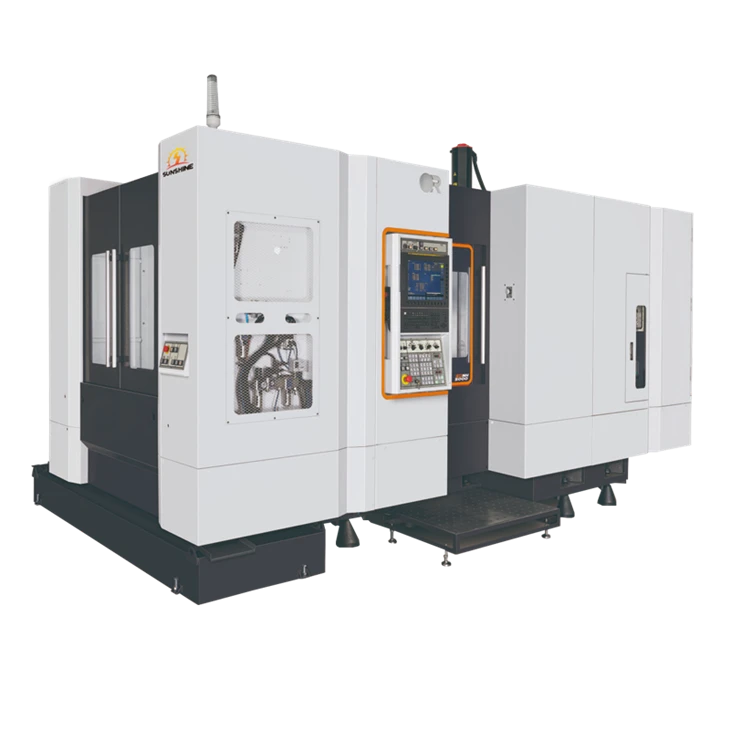

But it's not just about the raw numbers. Heller has put a lot of technology into their spindle systems to ensure smooth and reliable operation at high speeds. They use advanced bearing technologies to reduce friction and heat generation. Heat is a big enemy of high - speed machining because it can cause the spindle to expand, which can lead to inaccuracies in the finished part. Heller's spindle cooling systems help to keep the temperature in check, allowing the spindle to maintain its accuracy even during long - running machining operations.
Another factor to consider is the type of spindle drive. Heller uses different types of drives, like belt drives and direct - drive systems. Belt - driven spindles are often more cost - effective and can provide a good balance between speed and torque. They work well in a wide range of applications. Direct - drive spindles, on the other hand, offer even higher precision and faster acceleration and deceleration times. They're commonly found in the high - end, high - speed models of Heller Machining Centers.
Now, if you're in the market for a used Heller Machining Center, the maximum spindle speed is still a crucial factor. The used machines can offer a great value, especially if you're on a budget. However, you need to make sure that the machine's spindle has been well - maintained. A worn - out spindle can cause problems like reduced speed, poor accuracy, and increased vibration. You can find some good options for used Heller Machining Centers on Used Horizontal Machining Center.
When choosing the right Heller Machining Center based on spindle speed, you need to think about your specific needs. If you're mainly doing finishing work and need to work with small tools, a machine with a high maximum spindle speed is the way to go. But if you're focused on heavy - duty roughing and removing large amounts of material, a machine with a lower but more torque - rich spindle speed will be more suitable.
It's also important to consider the overall performance of the machine in combination with the spindle speed. For example, the feed rate of the machine (how fast the workpiece moves relative to the cutting tool) needs to be coordinated with the spindle speed. If the feed rate is too high for the spindle speed, it can cause the cutting tool to wear out quickly or even break. On the other hand, if the feed rate is too low, you're not using the machine's capabilities to their fullest, and you'll end up with longer machining times.
In addition, the control system of the Heller Machining Center plays a big role. The control system allows you to program the spindle speed and other machining parameters precisely. Heller's control systems are user - friendly and can be easily customized to suit your specific machining requirements. They also have features like automatic tool compensation, which can help to maintain the accuracy of the machining process even as the cutting tool wears down.
So, in conclusion, the maximum spindle speed of Heller Machining Centers can vary from around 4,000 RPM for heavy - duty machines to up to 18,000 RPM for precision - oriented ones. It's all about choosing the right speed for your specific application. Whether you're a small - scale workshop or a large - scale manufacturing plant, there's a Heller Machining Center with the right spindle speed for you.
If you're interested in learning more about Heller Machining Centers or want to discuss which model with the appropriate spindle speed is right for your business, feel free to reach out. We're here to help you make the best choice for your machining needs and ensure that you get the most out of your investment.
References
- Heller Machining Center product manuals
- Industry reports on machining center technology



