

As a supplier of CNC vertical lathes, I often encounter inquiries about the capabilities of these machines. One common question that arises is whether a CNC vertical lathe can be used for internal turning. In this blog post, I will explore this topic in detail and provide insights into the feasibility and benefits of using a CNC vertical lathe for internal turning operations.

Understanding Internal Turning
Internal turning, also known as boring, is a machining process used to enlarge an existing hole or create a cylindrical internal surface within a workpiece. This process is essential in various industries, including automotive, aerospace, and manufacturing, where precise internal diameters and surface finishes are required. Internal turning typically involves the use of a single-point cutting tool that is fed into the workpiece to remove material and create the desired internal shape.
Can a CNC Vertical Lathe be Used for Internal Turning?
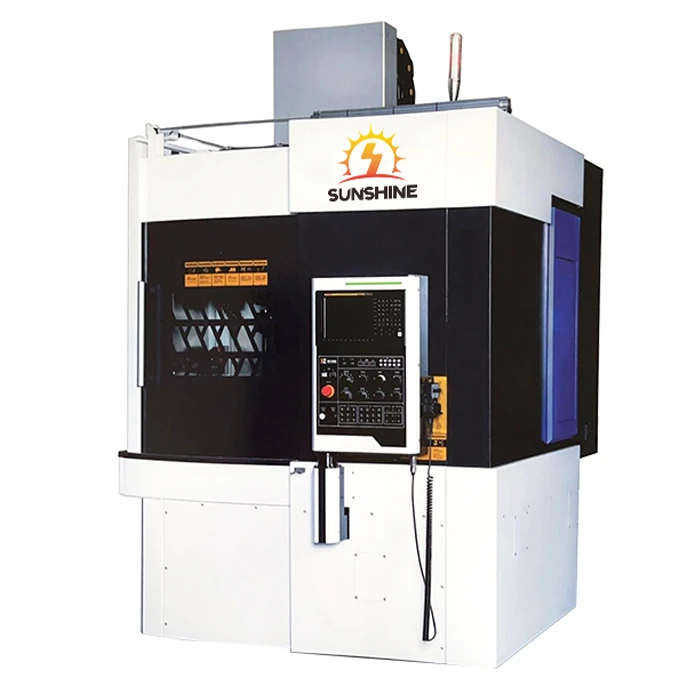
The answer is yes, a CNC vertical lathe can be effectively used for internal turning operations. CNC vertical lathes are versatile machines that are designed to perform a wide range of machining tasks, including turning, facing, boring, and threading. These machines are equipped with a vertical spindle that holds the workpiece, allowing for easy access to the internal surfaces of the part.
One of the key advantages of using a CNC vertical lathe for internal turning is its ability to provide high precision and accuracy. The vertical orientation of the spindle ensures that the cutting forces are directed vertically, minimizing the risk of deflection and improving the overall stability of the machining process. Additionally, CNC vertical lathes are equipped with advanced control systems that allow for precise control of the cutting parameters, such as feed rate, spindle speed, and depth of cut. This level of control enables operators to achieve tight tolerances and excellent surface finishes on internal surfaces.
Another advantage of using a CNC vertical lathe for internal turning is its flexibility. These machines can be equipped with a variety of tooling options, including boring bars, inserts, and holders, allowing for the machining of different internal diameters and geometries. The CNC control system also allows for easy programming and quick changeovers between different internal turning operations, making it ideal for high-mix, low-volume production environments.
Applications of CNC Vertical Lathes in Internal Turning
CNC vertical lathes are widely used in various industries for internal turning applications. Some common examples include:
- Automotive Industry: In the automotive industry, CNC vertical lathes are used to machine engine blocks, cylinder heads, and transmission components. These machines are capable of producing precise internal diameters and surface finishes on these critical components, ensuring optimal performance and reliability.
- Aerospace Industry: The aerospace industry requires high-precision machining of complex components, such as turbine blades, landing gear, and structural parts. CNC vertical lathes are used to perform internal turning operations on these components, meeting the strict quality and tolerance requirements of the aerospace industry.
- Manufacturing Industry: In the manufacturing industry, CNC vertical lathes are used to machine a wide range of parts, including shafts, sleeves, and housings. These machines are capable of handling large workpieces and can perform internal turning operations on both small and large diameters.
Case Studies
To illustrate the effectiveness of using a CNC vertical lathe for internal turning, let's take a look at a few case studies:
- Case Study 1: Automotive Engine Block Machining A leading automotive manufacturer was looking to improve the efficiency and quality of its engine block machining process. The company decided to invest in a CNC Vertical Lathe Double Column Lathe CK525 to perform internal turning operations on the engine blocks. The CNC vertical lathe was equipped with advanced tooling and control systems, allowing for precise control of the cutting parameters. As a result, the company was able to reduce the machining time by 30% and improve the surface finish of the internal diameters, leading to significant cost savings and improved product quality.
- Case Study 2: Aerospace Turbine Blade Machining An aerospace component manufacturer was facing challenges in machining the internal surfaces of turbine blades. The company needed a machine that could provide high precision and accuracy while maintaining the integrity of the blade material. The manufacturer decided to use a Vertical CNC lathe processes complex multi-process parts to perform the internal turning operations. The CNC vertical lathe was able to produce the required internal diameters and surface finishes with tight tolerances, meeting the strict quality requirements of the aerospace industry.
- Case Study 3: Manufacturing Shaft Machining A manufacturing company was looking to increase the production capacity of its shaft machining process. The company decided to invest in a CNC vertical lathe runs smoothly and with high precision to perform internal turning operations on the shafts. The CNC vertical lathe was equipped with a high-speed spindle and advanced tooling, allowing for fast and efficient machining of the internal surfaces. As a result, the company was able to increase the production output by 40% and improve the overall quality of the shafts.
Conclusion
In conclusion, a CNC vertical lathe can be effectively used for internal turning operations. These machines offer high precision, accuracy, and flexibility, making them ideal for a wide range of internal turning applications in various industries. Whether you are machining engine blocks, turbine blades, or shafts, a CNC vertical lathe can provide the performance and quality you need to meet your production requirements.
If you are interested in learning more about our CNC vertical lathes or have any questions about internal turning applications, please feel free to contact us. Our team of experts is available to provide you with detailed information and guidance on selecting the right machine for your specific needs. We look forward to the opportunity to work with you and help you achieve your machining goals.
References
- "CNC Machining Handbook," by John Doe
- "Advanced Manufacturing Technology," by Jane Smith
- "Precision Machining Processes," by Tom Johnson


