

Hey there, folks! As a supplier of High Precision CNC Lathes, I often get asked about the various parts and their functions. One component that always seems to pique people's curiosity is the tailstock quill. So, today, I'm gonna dive deep into what the function of the tailstock quill in a High Precision CNC Lathe is.
What is a Tailstock Quill?
First things first, let's get a clear idea of what the tailstock quill actually is. In a CNC lathe, the tailstock is located at the non - drive end of the machine. It's a movable unit that can be adjusted along the bed of the lathe. The quill is a cylindrical part that can be extended or retracted from the tailstock.
Think of it like a telescoping rod that can move in and out of the tailstock body. This movement is carefully controlled, either manually or through the CNC system, depending on the model of the lathe.

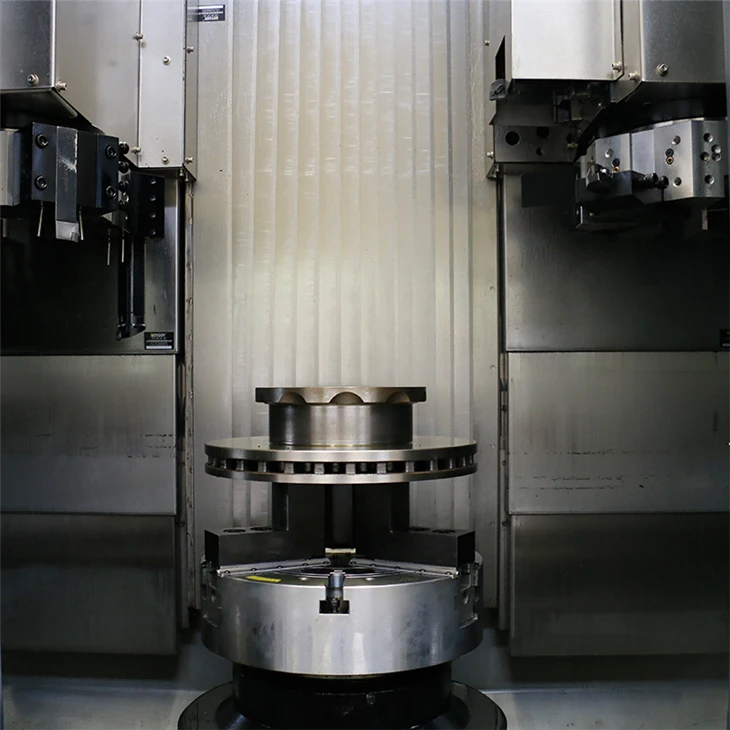
Support for Long Workpieces
One of the primary functions of the tailstock quill is to provide support for long workpieces. When you're working on a long shaft or a bar, the weight of the workpiece can cause it to sag in the middle. This sagging can lead to inaccurate machining because the cutting tool won't be interacting with the workpiece as it should.
The tailstock quill comes to the rescue by pressing against the end of the workpiece. By applying a controlled amount of pressure, it helps to keep the workpiece straight and centered. This ensures that the cutting operations are carried out precisely along the length of the workpiece. For example, if you're turning a long axle on our Multi - function Cutting CNC Lathe, the tailstock quill will prevent the axle from bending, resulting in a smooth and accurate finish.
Mounting of Tools
Another important function of the tailstock quill is to mount various tools. You can attach a drill bit, a reamer, or a center drill to the end of the quill. This allows you to perform operations like drilling holes or reaming existing holes right on the lathe without having to move the workpiece to a separate drilling machine.
Let's say you're manufacturing a precision part with a hole in the center. You can use the tailstock quill to hold the drill bit. Once you've positioned the workpiece correctly, you can advance the quill into the workpiece, drilling the hole to the desired depth and diameter. This not only saves time but also improves the accuracy of the hole, as the alignment with the workpiece is maintained within the lathe's precision framework. Our High Rigidity Turning CNC Lathe is well - equipped to handle such operations with the help of the tailstock quill.
Centering Operations
The tailstock quill plays a crucial role in centering operations. When you're setting up a workpiece on the lathe, it's essential to ensure that it is perfectly centered between the headstock and the tailstock. The quill can be used to hold a live center or a dead center.
A live center rotates with the workpiece, reducing friction and wear, while a dead center remains stationary. By adjusting the position of the quill, you can bring the center into contact with the end of the workpiece, ensuring that it is aligned with the axis of rotation. This centering is vital for achieving high - precision turning operations. For instance, on our Precision Machining CNC Vertical Lathe, accurate centering with the tailstock quill is the key to producing parts with tight tolerances.
Adjusting Cutting Depth
In some cases, the tailstock quill can also be used to adjust the cutting depth indirectly. When you're performing operations like facing or turning, the position of the workpiece relative to the cutting tool needs to be precisely controlled. By advancing or retracting the quill, you can change the position of the end of the workpiece, which in turn affects the cutting depth.
This is especially useful when you're working on complex parts that require multiple passes at different depths. You can program the CNC system to move the tailstock quill to the appropriate position for each pass, ensuring consistent and accurate machining.
Advantages of a Well - Functioning Tailstock Quill
Having a tailstock quill that functions properly offers several advantages. Firstly, it significantly improves the accuracy of the machining process. As I've mentioned earlier, it helps to keep the workpiece straight and centered, reducing errors and ensuring that the final product meets the desired specifications.
Secondly, it enhances the versatility of the lathe. With the ability to mount different tools on the quill, the lathe can perform a wider range of operations in one setup. This saves time and reduces the need for additional equipment, making the manufacturing process more efficient.
Finally, it extends the life of the cutting tools. By providing proper support to the workpiece and maintaining accurate cutting conditions, the tailstock quill reduces the stress on the cutting tools. This means that the tools will wear out less quickly, resulting in lower tooling costs over time.
Maintenance and Care
To ensure that the tailstock quill continues to perform its functions effectively, it's important to carry out regular maintenance. Keep the quill clean by removing any chips or debris that may accumulate during machining. Lubricate the moving parts according to the manufacturer's recommendations to prevent friction and wear.
Check the alignment of the quill regularly to make sure it is moving in a straight line. If you notice any signs of misalignment or excessive play, it's crucial to address the issue promptly to avoid compromising the accuracy of the machining operations.
Conclusion
So, there you have it, the tailstock quill in a High Precision CNC Lathe is a vital component that serves multiple functions. From supporting long workpieces to mounting tools and ensuring accurate centering, it plays a key role in achieving high - quality machining results.
If you're in the market for a High Precision CNC Lathe that comes with a reliable tailstock quill and many other advanced features, we'd love to have a chat with you. Whether you're a small - scale workshop or a large - scale manufacturing facility, our range of lathes can meet your needs. Don't hesitate to reach out to us for more information and to discuss your specific requirements. Let's work together to take your machining operations to the next level!
References
- "CNC Machining Handbook"
- "Precision Lathe Operations Manuals"



