

Hey there! As a supplier of Vertical CNC Machines, I often get asked about the number of axes these machines usually have. Well, let's dive right into it and explore this topic in detail.
The Basics of Axes in Vertical CNC Machines
First off, what exactly do we mean by axes in a CNC machine? Axes define the directions in which the cutting tool or the workpiece can move. In a Vertical CNC Machine, the number of axes plays a crucial role in determining the machine's capabilities and the complexity of the parts it can produce.
3 - Axis Vertical CNC Machines
The most common type of Vertical CNC Machine is the 3 - axis one. These machines have three linear axes: X, Y, and Z. The X - axis typically represents the left - to - right movement of the cutting tool or the workpiece. The Y - axis is for the forward - and - backward movement, and the Z - axis controls the up - and - down movement.
3 - axis machines are great for a wide range of applications. They're perfect for simple milling, drilling, and boring operations. For example, if you're making flat parts with holes or simple profiles, a 3 - axis Vertical CNC Machine can get the job done efficiently. Many small to medium - sized manufacturers rely on these machines because they're relatively affordable and easy to operate.
If you're interested in a machine for basic industrial processing, you might want to check out our Milling and drilling machining center. It's a 3 - axis machine that offers high - quality performance for various tasks.
4 - Axis Vertical CNC Machines
Next up, we have the 4 - axis Vertical CNC Machines. In addition to the X, Y, and Z axes, a 4 - axis machine adds a rotary axis, usually labeled as the A - axis. This rotary axis allows the workpiece to rotate around one of the linear axes, typically the X - axis.
The addition of the rotary axis opens up new possibilities. You can create more complex parts with curved surfaces or features that require indexing. For instance, if you're making gears or parts with angled holes around a cylindrical surface, a 4 - axis machine is the way to go. It gives you more flexibility compared to a 3 - axis machine and can increase your productivity when dealing with certain types of workpieces.
5 - Axis Vertical CNC Machines
Now, the 5 - axis Vertical CNC Machines are the real powerhouses. Along with the X, Y, and Z linear axes, they have two rotary axes. Commonly, these are the A - axis (rotation around the X - axis) and the B - axis (rotation around the Y - axis).
With 5 - axis machines, you can produce extremely complex parts with ease. They can reach almost any angle on the workpiece, allowing for simultaneous machining from multiple sides without having to reposition the part. This reduces setup time and improves accuracy. Industries like aerospace, automotive, and medical device manufacturing often use 5 - axis Vertical CNC Machines to make parts with intricate geometries, such as turbine blades or custom - made medical implants.
Our Graphite Special Machining Center Machine is a great example of a high - end 5 - axis machine. It's designed specifically for graphite machining but can also handle other materials with precision.
Choosing the Right Number of Axes
So, how do you decide which number of axes is right for your business? Well, it depends on several factors.
Complexity of Parts
If you're mainly making simple, flat parts, a 3 - axis machine will probably be sufficient. It's cost - effective and can handle most basic operations. But if you need to produce parts with more complex geometries, like curved surfaces or multiple angles, you'll want to consider a 4 - or 5 - axis machine.
Production Volume
For high - volume production of simple parts, a 3 - axis machine can be very efficient. However, if you're producing low - volume, high - complexity parts, a 4 - or 5 - axis machine might be a better investment. It can reduce the number of setups and increase the overall quality of the parts.
Budget
Let's face it, budget is always a consideration. 3 - axis machines are generally the most affordable option, making them a great choice for small businesses or those just starting out. 4 - axis machines are a step up in price, and 5 - axis machines are the most expensive. But remember, the increased capabilities of a 4 - or 5 - axis machine can lead to higher - value work and potentially greater profits in the long run.
Our Multifunctional Machines
We also offer a Multifunctional Drilling Tapping And Milling Center. This machine is available in different axis configurations, so you can choose the one that best suits your needs. It combines multiple operations in one machine, which can save you time and money. Whether you need to drill, tap, or mill, this machine can handle it all.
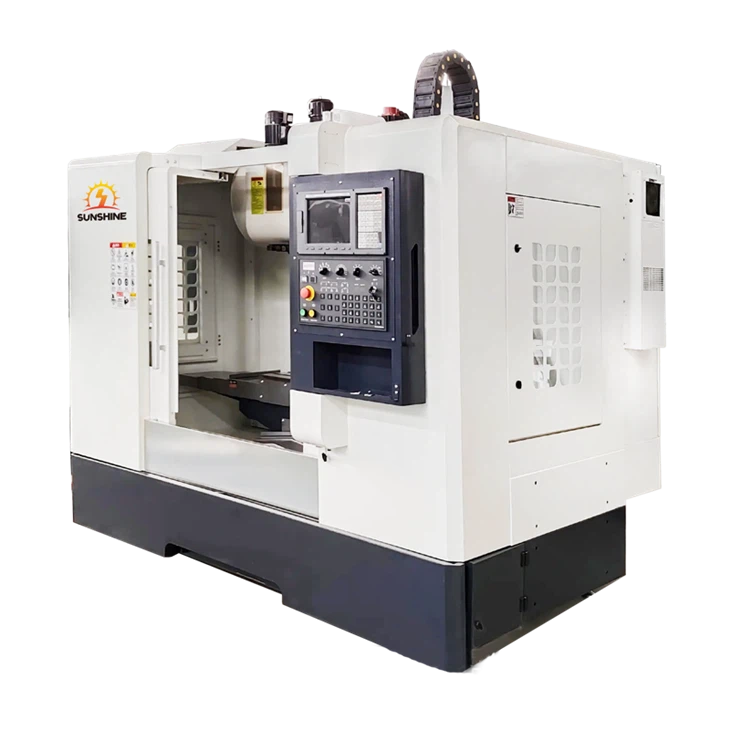

Contact Us for Purchase and Negotiation
If you're in the market for a Vertical CNC Machine, we're here to help. We understand that choosing the right machine can be a big decision, and we're happy to answer any questions you might have. Whether you're interested in a 3 - axis, 4 - axis, or 5 - axis machine, we have a range of options to meet your requirements.
Don't hesitate to reach out to us to discuss your specific needs and get a quote. We're committed to providing high - quality machines and excellent customer service. Let's work together to find the perfect Vertical CNC Machine for your business.
References
- "CNC Machining Handbook" - A comprehensive guide on CNC machines and their operations.
- Industry reports on the latest trends in Vertical CNC Machine technology.



